-
Amethyst Crystal Skull - Oracle of Awakening
Regular price €301,00 EURRegular price -
Winged Amethyst Crystal Skull - The Messenger
Regular price €470,00 EURRegular price -
Large Amethyst Crystal Skull – Primordial Light
Regular price €730,00 EURRegular price -
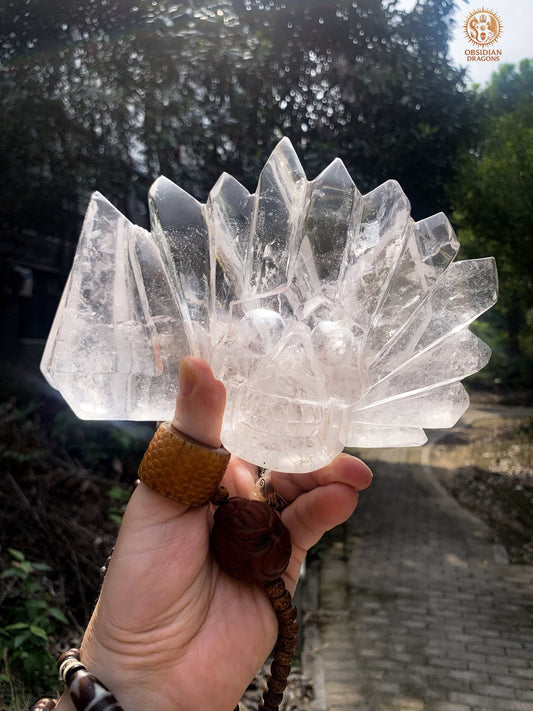
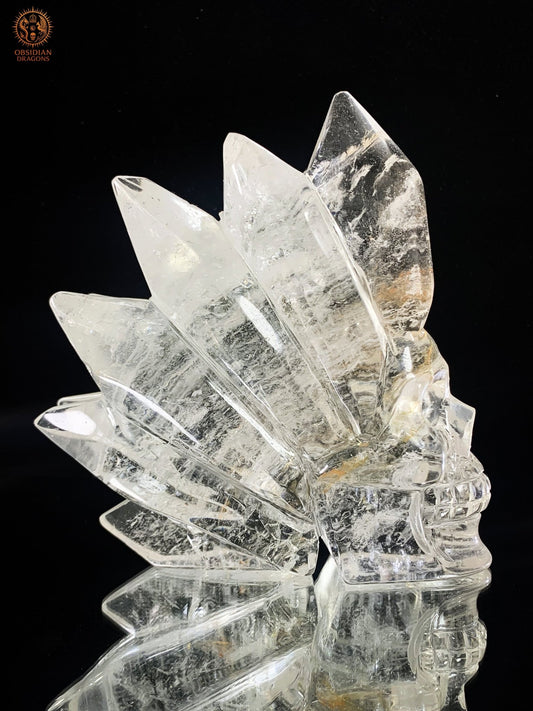
Rock Crystal Skull – Crown of Light
Regular price €680,00 EURRegular price -
Crystal Skull - Carved Natural Quartz and Rough Volumes
Regular price €394,00 EURRegular price -
Rock Crystal Skull – Crest of Light
Regular price €566,00 EURRegular price -
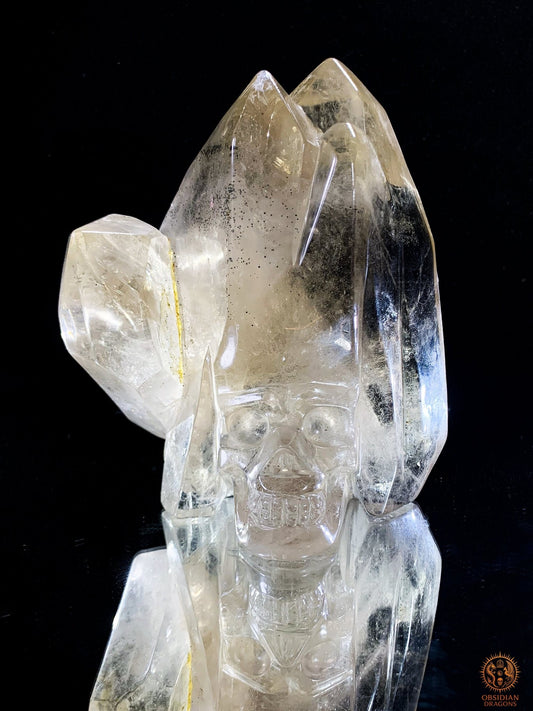
Rock Crystal Skull - Crystal Spike Skull
Regular price €614,00 EURRegular price -
Colossal Lodolite Quartz Crystal Skull – Exceptional
Regular price €1.642,00 EURRegular price -
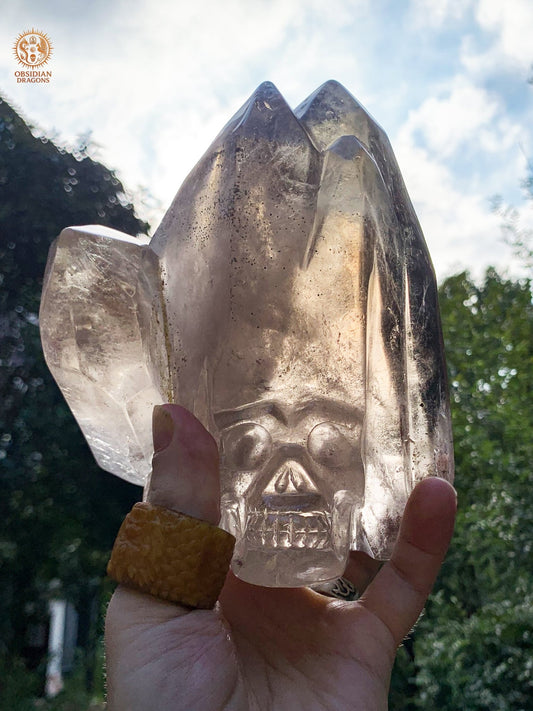
Imposing Elongated Alien Crystal Skull – Smoky Quartz – 3.14kg
Regular price €1.334,00 EURRegular price -
Elongated Crystal Skull - Chlorite Quartz - Purification
Regular price €160,00 EURRegular price -
Rock crystal skull with tourmaline inclusions
Regular price €1.200,00 EURRegular price -
Celestial Eye Obsidian Skull - Art and Spirituality
Regular price €395,00 EURRegular price -
Celestial Eye Obsidian Skull - Rare Spiritual Sculpture
Regular price €395,00 EURRegular price -
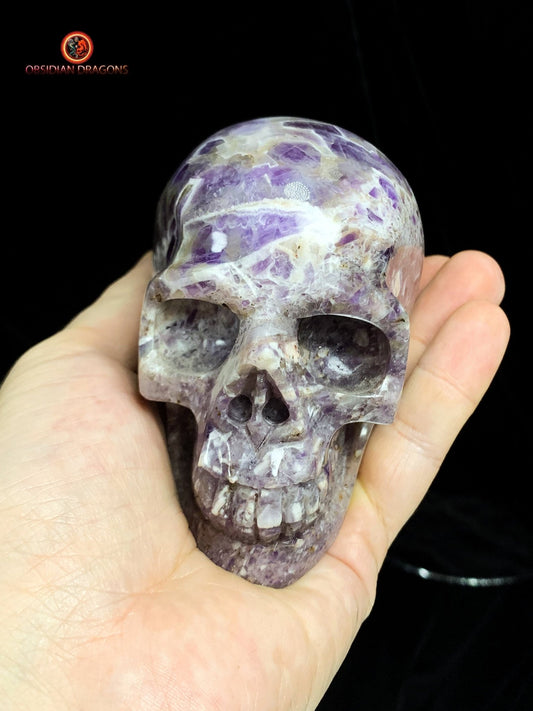
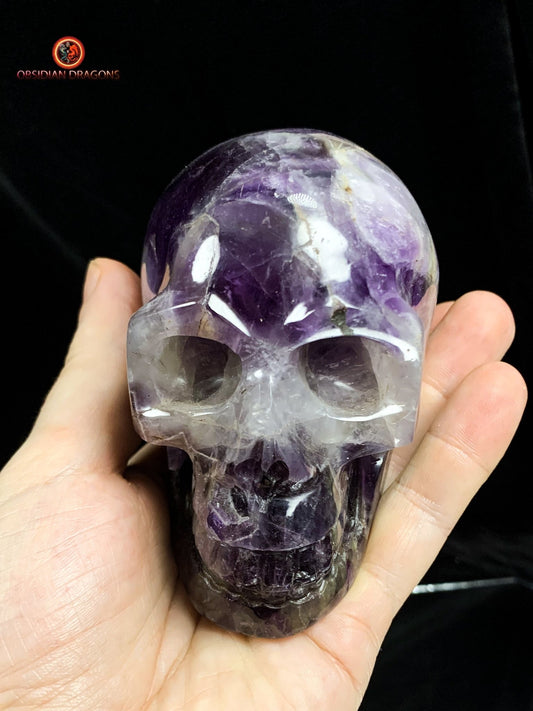
Amethyst Crystal Skull - Mystical Aura
Regular price €204,00 EURRegular price -
Amethyst Skull - Crystal Wisdom
Regular price €215,00 EURRegular price -
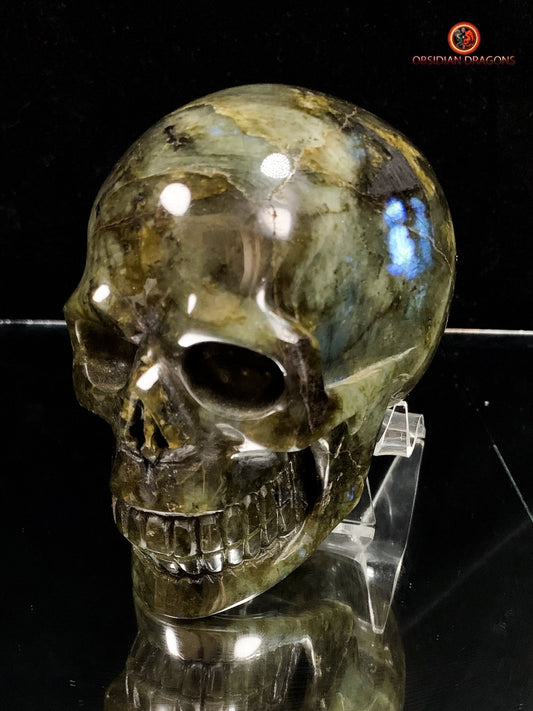
Natural Labradorite Skull - Handmade
Regular price €321,00 EURRegular price
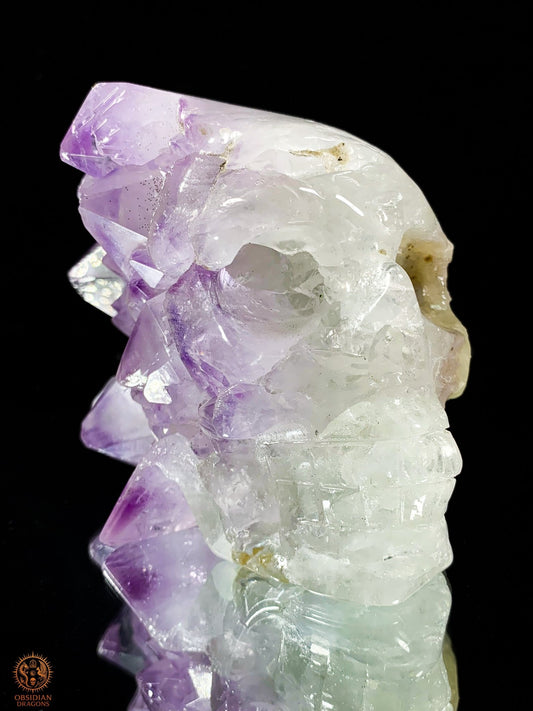
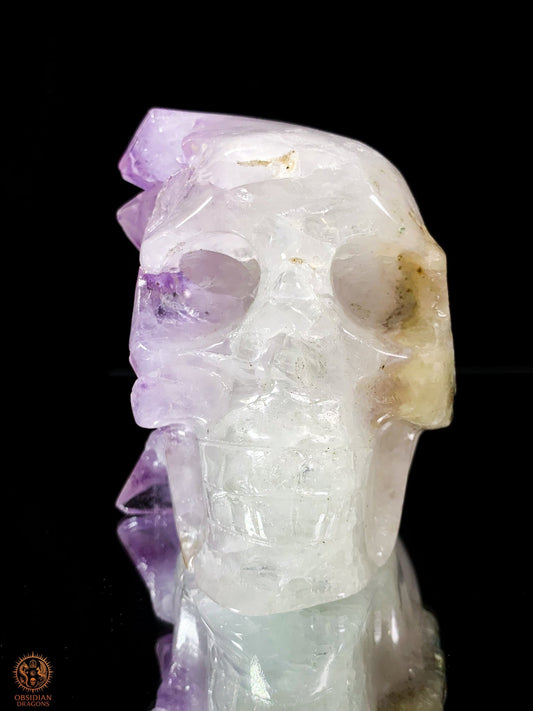
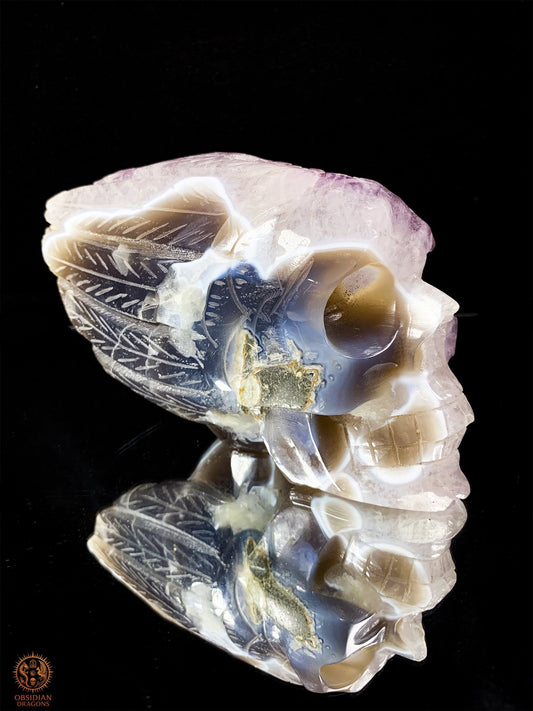
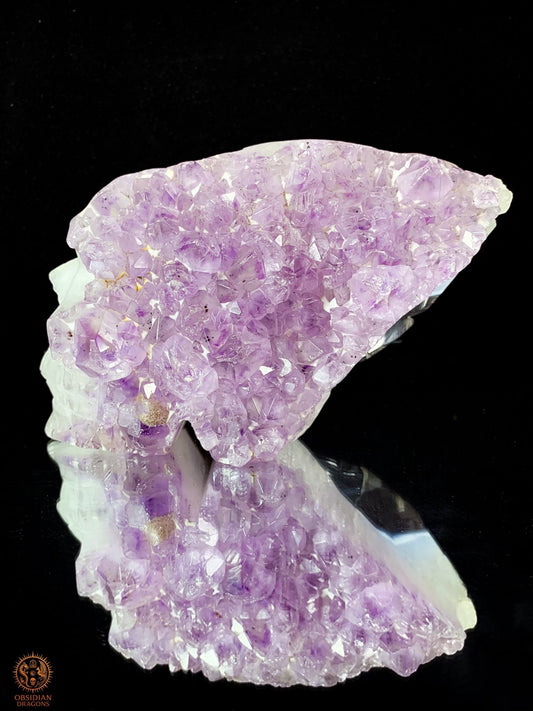
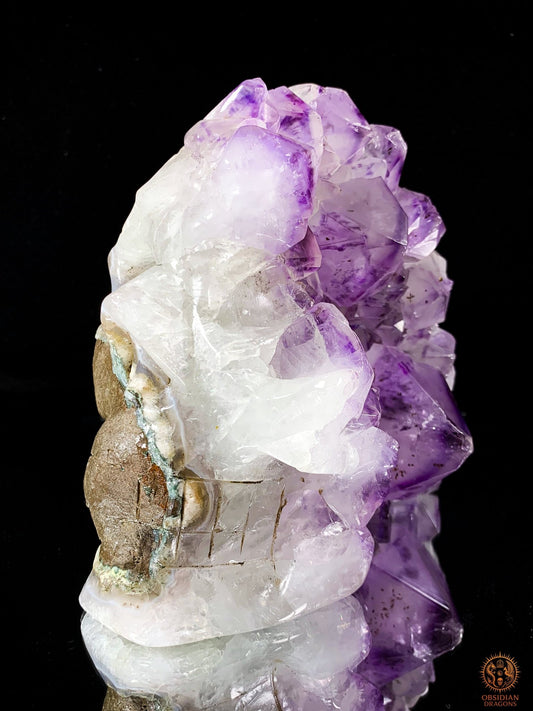
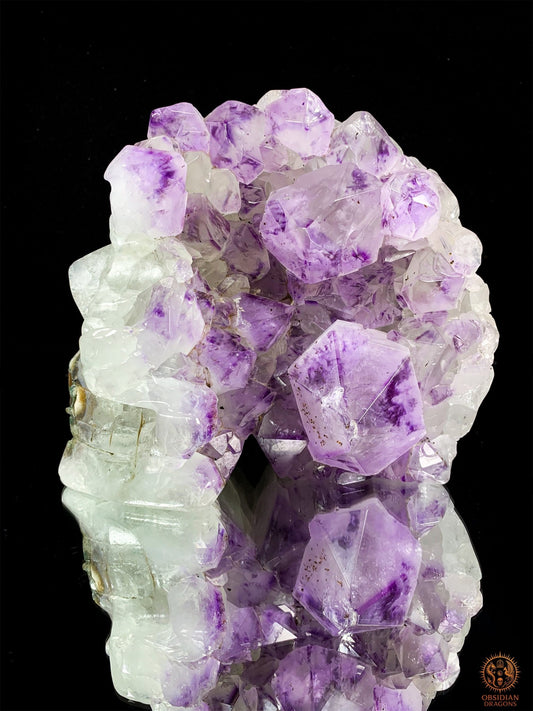
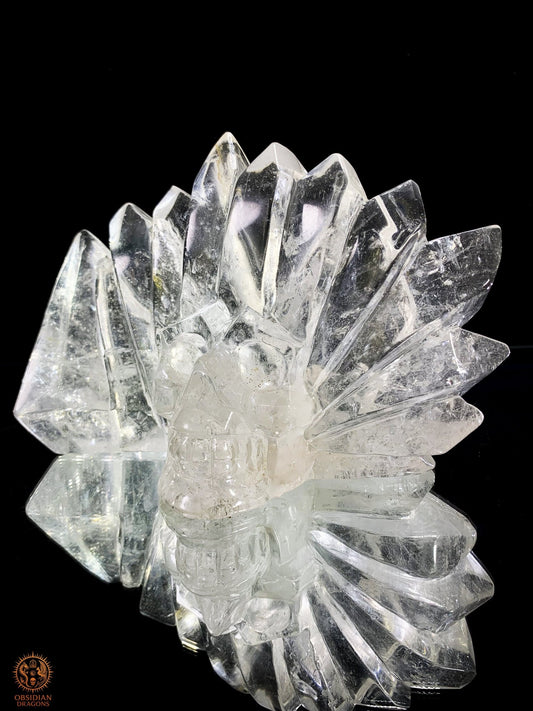
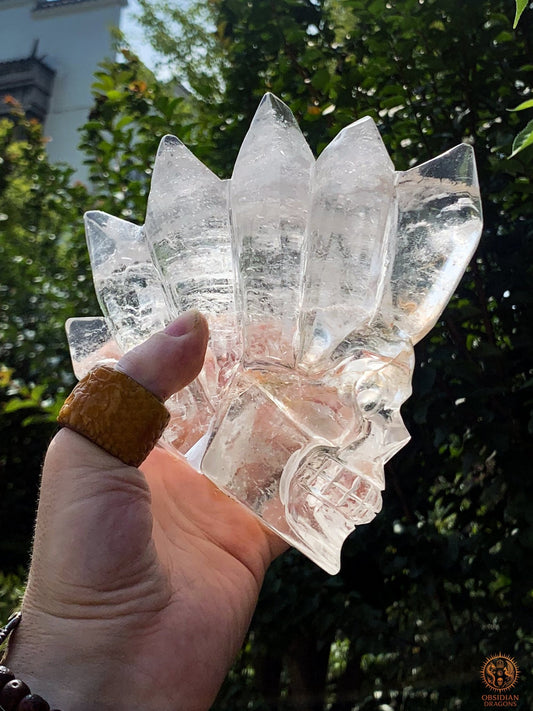

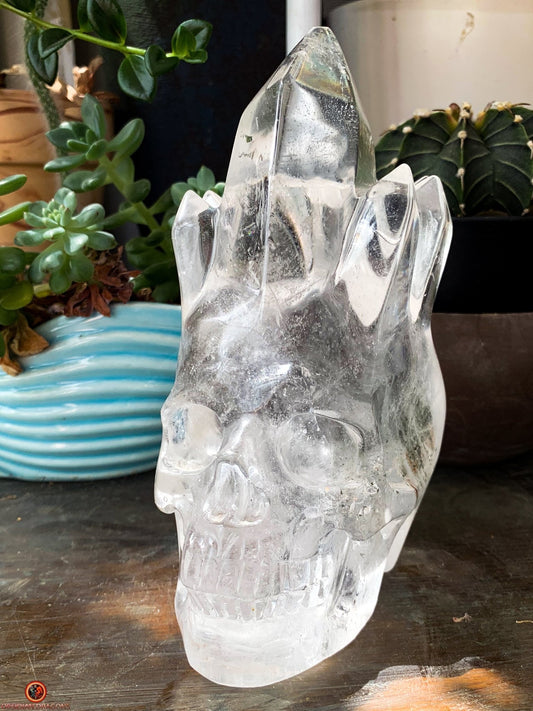

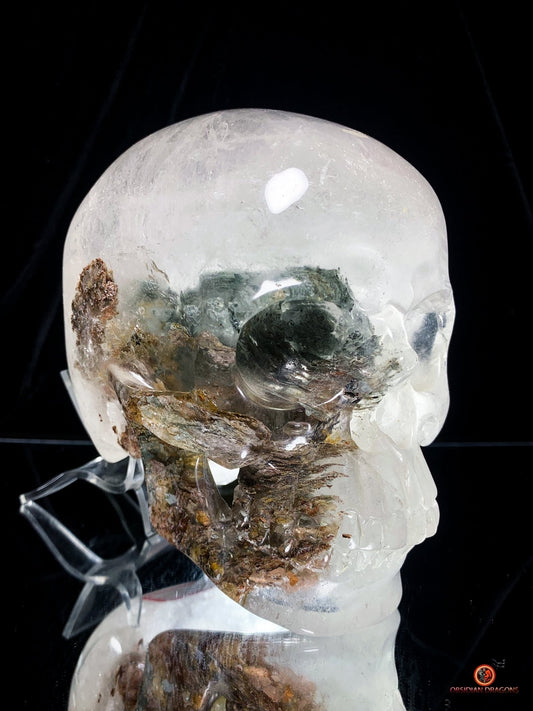

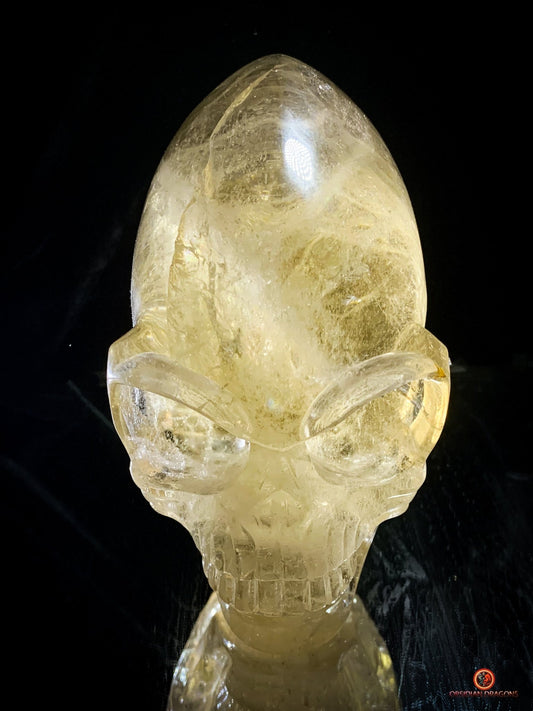

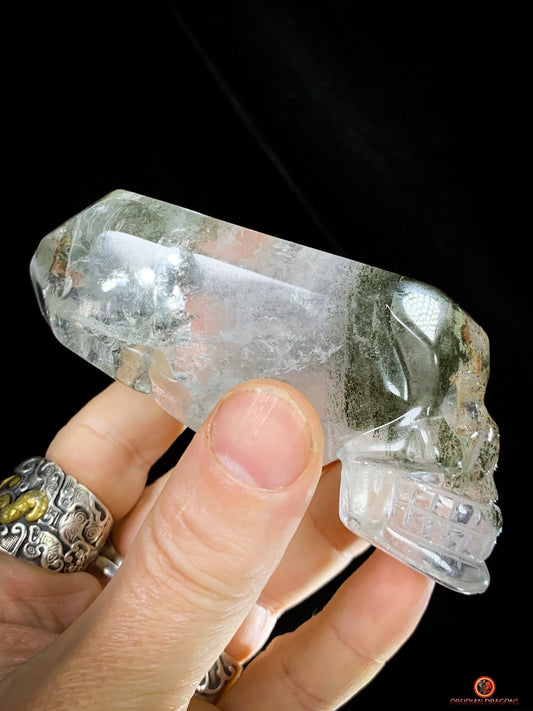

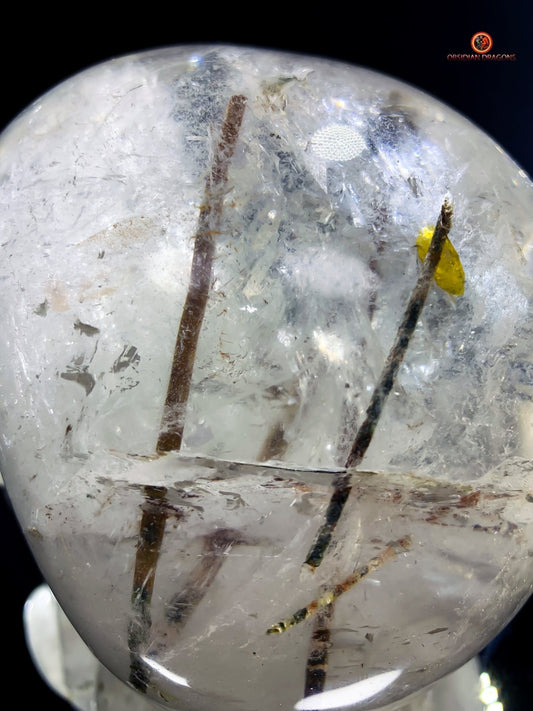

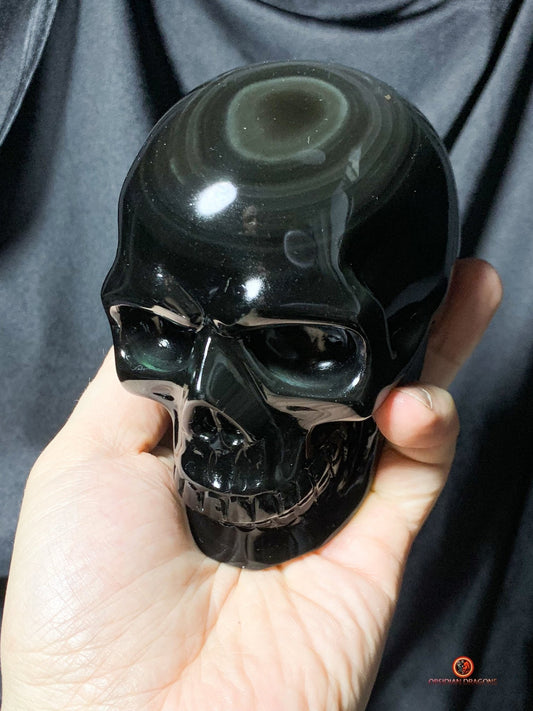

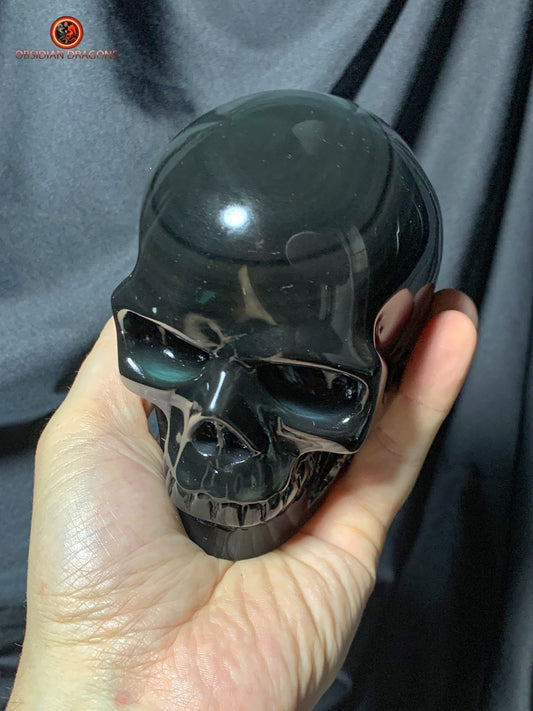



Collection: Natural Stone Crystal Skulls – One-of-a-Kind Pieces
💀 Natural Quartz, Obsidian and Fine Stone Crystal Skulls: Handcrafted Sculptures, Gemmology, Meditation and Spiritual Symbolism
The form of the crystal skull is immediately recognizable, but its meaning remains open. It evokes the body and what survives it—memory, consciousness, transformation, impermanence—and that ancient question every civilization asks in its own way: what remains when appearance disappears?
The Obsidian Dragons crystal skull collection brings together handcrafted skulls made from rock crystal, inclusion quartz, amethyst, geode, obsidian, fluorite, labradorite, malachite, red jasper, and lapis lazuli, as well as skulls carved from fossilized ammonites. Some creations follow a relatively realistic human anatomy; others become alien, winged, horned, or elongated skulls. A few pieces preserve the mineral's raw points, cavities, and volumes, while others seek a mirror polish and anatomical precision.
Each natural stone skull is chosen for the meeting of its material and form. A tourmaline inclusion may cross a temple; a quartz druse may open the skull to a crystalline landscape; a silvery reflection may appear in the obsidian like light beneath the surface. The sculptor must read the stone's fractures, transparencies, areas of color, and fragilities before revealing the face that may already be within.
These creations are natural stone collectibles, collector skulls, mineral vanities, objects for contemplation, spiritual sculptures, or simply lapidary works chosen for their beauty.
A collector's crystal skull can be an intimate small sculpture or a monumental mineral piece.

🔍 Unique Piece, Authenticity and Gemmological Expertise
The expression "true crystal skull" can refer to two very different realities. It can mean that the sculpture is made of natural quartz rather than artificial glass or resin. It can also imply that an object is an authentic ancient relic.
The identification of a natural stone relies on a set of gemmological observations: structure, inclusions, refractive index when the form allows, density, optical behavior, spectrum, and sometimes complementary instrumental analyses. Appearance alone is not always sufficient, especially when dealing with glass, reconstituted materials, dyes, and treatments.
As the creator of Obsidian Dragons and a gemmology graduate of the National Institute of Gemmology in Paris, I select the raw materials before sculpting and ensure the consistency of the descriptions. This expertise makes it possible to distinguish many natural stones from their imitations and to identify the characteristics important for sculpting.
A unique piece is first and foremost unique because the natural structures of the material do not repeat. Even two sculptures made from the same model will have different inclusions, bands, reflections, or crystallizations. Small handcrafted series must be distinguished from entirely unique creations, and a sold piece must not be artificially presented as available.
The collection includes high-end crystal skulls, unique mineral pieces, small objects for contemplation, decorative stone skulls, and collector crystal skulls. A rare crystal skull or a one-of-a-kind crystal skull is defined not only by its price, but by the irreproducible harmony between material, craftsmanship, and symbolic coherence.
🔬 What Is a Crystal Skull?
A rock crystal skull is a representation of a human skull carved from colorless quartz. In contemporary commercial use, the expression "crystal skull" has become broader. It commonly refers to a skull sculpture made of crystal, rock, natural volcanic glass, or another gem material.
This expanded meaning allows us to speak of an obsidian skull, a labradorite skull, or a jasper skull without claiming that all these materials have the same structure.
Obsidian Dragons retains the expression sought by the public while specifying the actual composition of each piece.
A crystal has an ordered atomic structure. A rock can consist of a single dominant mineral or an assemblage of several minerals. A fossil is the mineralized remains or trace of an ancient organism. Obsidian, meanwhile, is an amorphous natural volcanic glass: it is therefore not a crystal in the mineralogical sense.
The term natural crystal skull means that the sculpted material is natural, not that the object is a pre-Columbian artifact or an ancient relic. The sculpture can be entirely contemporary while having been made from quartz, obsidian, amethyst, or another stone formed by natural geological processes.
We also encounter the terms fine stone skull, gem stone skull, mineral skull, carved stone skull, natural stone skull, or skull sculpture. They describe similar objects, but do not by themselves indicate the precise nature of the material, its origin, any treatments, or the quality of the lapidary work.
⚒️ Lapidary Art: Reading the Stone Before Sculpting
A convincing skull sculpture is born from the quality of the roughing, the balance of the volumes, the work on the eye sockets, the fineness of the teeth, and the continuity of the lines between the forehead, temples, and jaw.
The work begins with observation. The lapidary looks for open fractures, inclusions, color changes, cavities, and the directions in which the material best accepts carving. On a transparent piece, they must anticipate what will be seen through several centimeters of quartz. On a geode, they compose around the void. On a labradorite or obsidian with reflections, they orient the surface according to the light.
Then come carving, sculpting, engraving the details, and the successive polishing stages. The finishes can be glossy, satin, matte, or deliberately contrasting. A hyperrealistic obsidian skull can juxtapose matte bone and mirror areas; a quartz creation can preserve raw volumes; a geode can contrast the polished face with the roughness of its natural matrix.
The term hand-sculpted skull or handcrafted skull does not necessarily mean that every gram of material is removed with a manual tool without mechanical assistance. Contemporary lapidary sculpture uses saws, rotary tools, abrasives, and polishing systems. Lapidary work lies in selection, orientation, volume control, and finishing. Polishing the stone is therefore not the rejection of all tools, but the progressive mastery of abrasion.
Each handcrafted crystal skull nevertheless remains unique. Even when a workshop reproduces a similar design, no inclusion, agate band, reflection, or geode cavity is exactly repeated. Natural stone forbids a perfect copy.
🧭 How to Choose Your Crystal Skull?
The first criterion is the material. Rock crystal reveals light and inclusions; smoky quartz offers a brown depth; rutile draws needles; amethyst introduces purple and zoning; obsidian works with black and reflection; labradorite depends on movement; malachite, jasper, and lapis lazuli emphasize color and the design of the rock.
The form comes next. An anatomical or hyperrealistic skull produces a direct confrontation with the memento mori. A raw and polished skull shows the transition between geological formation and human intervention. A geode opens the volume to a crystalline architecture. An alien, winged, or horned skull moves the object elsewhere.
The dimensions and weight must be examined carefully. A small skull fits easily in the hands and is suitable for a mobile meditative practice. A large crystal skull weighing several kilograms becomes an exhibition piece that requires a stable piece of furniture, a suitable stand, and a location protected from impacts.
Observe the overall symmetry without requiring industrial perfection, the depth of the eye sockets, the regularity of the teeth, the continuity of the jaw, the stability of the base, and the harmony between the natural characteristics of the stone and the chosen anatomy.
To know which crystal skull to choose, also look at photographs taken from several angles, videos, exact dimensions, and actual weight. A spectacular inclusion in a close-up image may be discreet from a distance; a monumental piece may be much more imposing than it appears on a screen.
Rarity must be explained. It may depend on the quality and size of the raw material, the exceptional arrangement of inclusions, the difficulty of preserving a geode, the fineness of the work, or the unrepeatable nature of the composition. A high price does not prove rarity on its own, just as an affordable small piece is not necessarily devoid of interest.
For those looking for where to buy a crystal skull, the transparency of the listing is essential. Choosing a crystal skull online does not allow you to hold the object immediately; therefore, the remote sale of crystal skulls requires a material, dimensions, weight, origin when known, any treatments, and an actual condition clearly indicated. A natural stone skull for sale must be shown from several angles. Buying a natural crystal skull in a crystal skull shop is as much about choosing a sculpture as it is about understanding the material from which it came.
✨ Rock Crystal: The Foundational Material
Natural rock crystal is a mineral composed of silicon dioxide, with the formula SiO₂. Its hardness of 7 on the Mohs scale allows it to receive a luminous polish and retain fine details. This resistance to scratches does not, however, make it unbreakable: a violent impact can cause a fracture or awaken an internal crack.
In a rock crystal skull, light penetrates the material, meets veils, healed fractures, fluid cavities, or mineral inclusions, and then emerges from another angle. The face then appears to change with the lighting. The eye sockets darken, the cheekbones become luminous, and some internal structures seem to float behind the forehead.
A natural quartz skull, sometimes simply sought under the name quartz skull, should not be judged solely by an abstract idea of purity. A perfectly clear quartz can be remarkable, but a crystal skull with inclusions may possess an even greater aesthetic and gemmological value. The natural inclusions of quartz—needles, clouds, growth ghosts, and internal fractures—tell the successive episodes of its formation.
Rutile quartz contains acicular crystals of rutile, a titanium oxide. In a rutile quartz skull, these needles can cross the volume like golden, coppery, silvery, or dark threads. Their orientation, density, and arrangement determine a large part of the sculpture's personality.
The smoky quartz skull owes its color to color centers formed by the effect of natural irradiation associated with the presence of aluminum in the crystal lattice. Its hue varies from light brown to an almost black depth. When it contains black tourmaline, the schorl prisms create a contrast between the brown transparency of the quartz and the opacity of the inclusions.
A rock crystal skull with tourmaline, a black tourmaline quartz skull, or a rock crystal skull with tourmaline inclusions requires particularly attentive work. The inclusions are not mere ornaments added to the stone: they existed before the sculpture and must be integrated into its anatomy without weakening the sensitive areas.
The term "lodolite" is a commercial name used for certain quartz containing chlorite inclusions that evoke landscapes, mosses, or gardens. A lodolite quartz skull can thus reveal an inner world made of chlorite, iron oxides, clays, or other mineral phases.
Some models retain part of their original morphology. The face is polished while the top remains bristling with crystals. This dialogue proper to the raw and polished quartz skull, between natural points and three-dimensional sculpture, transforms the piece into a territory.
The terms Himalayan crystal skull or rock crystal from Nepal describe a documented provenance, the altitude of a deposit, its geology, and its extraction conditions.
💜 Amethyst, Chevron, and Natural Geode Skulls
Amethyst is the purple variety of quartz. Its color is linked to traces of iron and natural irradiation phenomena occurring in the crystal structure. It shares a hardness of 7 with rock crystal, but its visual language is different: purple gives the skull a twilight presence,
A natural amethyst skull, or amethyst crystal skull, can be sculpted from a relatively homogeneous mass, from a chevron amethyst, or from a geode. The chevron amethyst skull alternates purple areas and bands of lighter quartz forming points, Vs, or successive designs. On a skull, these structures can follow the forehead, cross the eye sockets, or meet at the top like a natural architecture.
The raw amethyst skull deliberately retains an unpolished part. This opposition reveals two simultaneous stories: that of the crystal as it formed and that of the figure shaped by the human hand. A large amethyst skull can thus be observed as a sculpture, a mineralogical specimen, and a monumental mineral piece.
In an amethyst geode skull or a quartz geode skull, the sculptor must compose with a cavity lined with crystals. The outer wall can consist of chalcedony or banded agate, while the interior carries a crystalline druse. The sculpted amethyst geode therefore does not result from a decorative assemblage: the cavity and its crystallizations belong to the original stone.
A sculpted quartz geode can become an open skull box, a crystallized jaw, or a forehead crossed by a luminous cavity. This meeting is designated by the expressions geode skull or skull in quartz druse. Each sculpture in a geode depends on a delicate balance. It is necessary to preserve the natural crystals, avoid areas of weakness, and bring out a coherent anatomy around a void that the artisan did not create. The raw and polished mineral sculpture thus preserves two states of the same material.
The collection welcomes both the small skull with natural crystals and the XXL crystal skull intended to become the centerpiece of a space. Dimension does not guarantee, on its own, quality. It is the harmony between the geode and the face, the fineness of the polishing, the stability of the base, and the preservation of the crystallizations that give the whole its value.
🌑 The Obsidian Skull: A Volcanic Mirror
Obsidian is a glassy volcanic rock derived from silica-rich magma whose solidification did not allow for the development of generalized crystallization. Its vitreous luster, conchoidal fracture, and amorphous nature distinguish it from quartz. A skull in natural volcanic glass therefore culturally belongs to the family of crystal skulls, but its mineralogical nature is different.
The natural obsidian skull, particularly the black obsidian skull, absorbs a large part of the light and transforms the reliefs into passages between shine and darkness. A matte finish softens the face and brings the surface closer to bone; a mirror finish, on the contrary, creates sharp reflections that move the contours when the observer moves. A skull in obsidian can thus go from austerity to brilliance depending on the chosen angle.
In a silver obsidian skull, fine internal structures reflect the light and produce a gray or metallic glow. Celestial Eye obsidian, a commercial name given to certain obsidians with concentric or multicolored reflections, can reveal rings when the material is correctly oriented and polished. A Celestial Eye obsidian skull succeeds when these optical areas come into relationship with the gaze, the forehead, or the volumes of the face.
Sculpting obsidian requires caution. The material accepts a remarkable polish, but its glassy nature makes it brittle. A sculpture in obsidian from Mexico can become a hyperrealistic obsidian skull, provided that the provenance is truly documented. The edges, teeth, and protruding parts must be protected from impacts.
To learn more about its formation, deposits, characteristics, and imitations,
read our study onobsidian, its history, its imitations, and its use in lithotherapy.
🌈 Fluorite, labradorite, malachite, jasper, and lapis lazuli
Fluorite, with the formula CaF₂, has a hardness of 4 and perfect cleavage. A fluorite skull can play with transparency, zoning, and internal planes, but it remains more fragile than a quartz skull. The delicacy of its wings, horns, or contours should never lead one to forget its mechanical sensitivity.
Labradorite belongs to the plagioclase feldspar group. Its blue, green, golden, or orange flashes are produced by the interaction of light with fine internal structures. In a labradorite skull, labradorescence is only visible from certain angles. The lapidary art therefore consists of orienting the stone so that the light accompanies the sculpture instead of disappearing once the work is completed.
Malachite is a basic copper carbonate recognizable by its green bands. A several-kilogram malachite skull is both a collectible mineral sculpture and a demonstration of natural design. The concentric curves, eyes, and fibrous lines of the rock become a second anatomy laid upon the first.
Red jasper is an opaque variety of microcrystalline silica whose colors are generally linked to iron oxides. A red jasper skull has a dense, earthy presence. Its brown, red, or hematite shades are particularly suited to the register of mineral vanity and memento mori. It also shows why the expression "natural rock skull" can be more accurate than "crystal" for certain pieces.
Lapis lazuli is not a single mineral, but a rock composed notably of lazurite, calcite, and frequently pyrite. In a lapis lazuli skull, the depth of the blue, the distribution of light patches, and the presence of golden grains determine the character of the piece. A uniform color is not always more authentic than a material clearly showing its composition.
The beauty of a crystal skull arises from the understanding of each material.
🐚 Fossil ammonite skulls: living time in stone
Ammonites were marine cephalopods with shells that appeared long before humans and disappeared at the end of the Cretaceous, about 66 million years ago. Their compartmentalized shells fossilized in many sedimentary environments. The genera Cleoniceras and Douvilleiceras, represented in the collection, belong to the immense diversity of Cretaceous ammonites.
A fossil ammonite skull, or a skull sculpted from a fossil, brings together two temporalities. The spiral bears witness to an ancient organism, while the human face is a contemporary intervention.
In a sculpted ammonite, the shape of the shell, the internal chambers, the sutures, and the recrystallized zones limit the sculptor's choices. The sculptor must decide which part to preserve, where to place the orbits, and how to make the teeth appear without erasing the fossil identity. A double-sided sculpted skull can exploit both faces or the symmetry of the shell, while a single face can develop around its central spiral. The pieces in the collection notably include ammonites from Madagascar attributed to the genera Cleoniceras and Douvilleiceras; each identification must remain linked to the information available for the specimen concerned.
An artisan-sculpted fossil naturally finds its place in a cabinet of curiosities. It can be viewed as a cabinet of curiosities object, a mineral curiosity, or a paleontological sculpture, provided that the stated species, origin, and any restorations are described transparently.
The skull recalls the brevity of a human existence. The ammonite expands this meditation to geological time. Between the two, the stone retains less an answer than a dizzying difference in scale.
🕯️ From memento mori to mineral vanity
Far from being a symbol of death, the skull is above all a symbol of consciousness, a symbol of impermanence, or a symbol of transformation. It also represents the visible seat of consciousness, that which protects the brain and remains of the face when individual features have disappeared. Its presence can worry, fascinate, or soothe depending on the cultural context and the personal relationship one maintains with it.
In European art, the memento mori — "remember that you will die" — reminds us of human finitude. Vanity art often combines the skull with a spent candle, a withered flower, an hourglass, a book, or a precious object. Its function is to question the cycle of life and death, the value of time, the fragility of power, the vanity of possessions, and the urgency of living with discernment.
Mineral vanity shifts this dialogue. Quartz formed long before the sculptor's birth and will probably continue to exist long after. The shape of the skull thus brings together human time and mineral time. It becomes a meditation on mortality, geological memory, and the transformation of matter.
The symbolism of the skull and the meaning of the crystal skull is vast. For some, the association between skull and wisdom evokes knowledge stripped of appearances; for others, it represents the awareness of impermanence, memory and transmission, or symbolic protection. A collector may see in it only a remarkable mineral sculpture. The same object can successively become a work of art, a spiritual object, an esoteric object, a support for contemplation, and a cabinet of curiosities piece.
The skull teaches us to look at life without turning our eyes from its limit.
📜 History, origin, and scientific analysis of crystal skulls
The history of crystal skulls and the question of their origin are inseparable from the great objects that entered European and American collections in the 19th and 20th centuries. These famous crystal skulls were long presented as Aztec, Mayan, or pre-Columbian works. Their impressive material, the initial lack of clear archaeological provenance, and the era's taste for Mesoamerican civilizations encouraged the birth of extraordinary stories.
Historical research, the contextual dating of crystal skulls, and microscopic examinations have profoundly changed this interpretation. Several famous skulls show tool marks on the quartz, notably marks from rotary instruments and techniques incompatible with pre-Columbian Mesoamerican lapidary work. The crystal skull in the British Museum is now considered probably European and made in the 19th century. The study of the crystal skull in the Smithsonian has also revealed modern tool marks indicating it was made in the mid-19th century or later. The crystal skull in the Musée du Quai Branly also belongs to this critical history of pre-Columbian attributions.
The Mitchell-Hedges crystal skull occupies a special place in the collective imagination. The accounts of its discovery in a Mayan city have been largely questioned by the documented history of the object and the art market to which it belonged. Its exceptional quality as a sculpture remains fascinating, but fascination and archaeological evidence are not synonymous.
Speaking of a pre-Columbian, Mayan, or Aztec crystal skull therefore requires solid archaeological and scientific provenance. A quartz sculpture from the 19th century does not become pre-Columbian because it was once sold as such, and the expression "fake ancient crystal skull" should not make us forget that a modern object can nevertheless have genuine historical interest. The value of the sculptures offered by Obsidian Dragons rests on the natural material, the lapidary work, their provenance when known, and the power of their composition.
This scientific analysis of crystal skulls does not destroy the mystery. It shifts it. It shows how an object can pass through the antiquities trade, museums, esoteric literature, and crystal skull popular culture to become a modern archetype.
🔮 The legend of the thirteen crystal skulls
The legend of crystal skulls, more precisely the legend of the thirteen crystal skulls, asserts in its many variants that twelve skulls should be gathered around a thirteenth to restore lost knowledge, reveal the memory of humanity, or accompany a transformation of collective consciousness. The "13 crystal skulls" are attributed, according to the accounts, to the Mayans, the Aztecs, Atlantis, or even civilizations from the stars.
No archaeological set or known ancient Mayan text establishes this story in the form circulated today. This modern myth belongs mainly to esoteric currents and New Age culture. Cinema, literature, Mesoamerican imagination, and channeling accounts have contributed to giving it the appearance of a much older tradition.
It would be reductive, however, to dismiss it without seeking what it expresses. The number thirteen often marks a passage beyond a complete cycle of twelve. The gathering of the skulls must be understood as an image of fragmented memory, shared knowledge, or the need to bring together separate perspectives.
At Obsidian Dragons, a contemporary skull does not need to be falsely attributed to a vanished civilization to possess spiritual significance. Its true history, its material, and the relationship created with its guardian are enough to give it an identity.
🏔️ Tibetan skulls, impermanence, and tantric Buddhism
Buddhism accords a central place to impermanence. The body changes, sensations pass, mental constructions transform, and no conditioned form remains identical to itself. The contemplation of death is not sought to cultivate fear, but to dispel the illusion of unlimited time.
In tantric iconography, skulls appear on the crowns of wrathful deities, in the ornaments of cremation grounds, and in the form of the kapāla. The kapāla is a ritual skull cup, sometimes richly mounted, whose function and context should not be confused with those of a quartz sculpture.
A Tibetan crystal skull, a Tibetan rock crystal skull, or a sculpted Tibetan skull is intended for contemplation.
A crystal skull with Sakyamuni Buddha or a Double Dorje crystal skull combines the skull shape with precise iconography. The double vajra, or crossed vajra, evokes the stability and indestructibility of enlightenment.
The symbolism of the skull in Buddhism and the relationship between skull and tantric Buddhism therefore require more precision than a simple assimilation to death. Tantric symbolism confronts the practitioner with the awareness of mortality and impermanence in Buddhism.
👽 Alien skulls, winged forms, and fantastic sculptures
The anatomical skull is based on a known form. The sculpted human skull and the hyperrealistic skull more or less faithfully respect this reference. The alien or traveler crystal skull departs from it to become an elongated skull, enlarging the cranium and orbits or reducing the jaw.
Transparent quartz is particularly suited to these creations, as its inclusions can resemble nebulae or planetary landscapes. A rock crystal alien skull, a lodolite quartz skull, or an elongated matte smoky quartz alien skull materializes a question: that of an intelligence whose form is not ours.
The winged skull combines mortality with elevation, travel, or passage. The horned skull introduces a more earthly and archaic power. The fantastic skull allows one to go beyond the limits of anatomy, while the skull with an owl brings together two symbols of the nocturnal gaze, knowledge, and that which remains hidden in the darkness.
Dragon skulls constitute a distinct universe. They no longer represent human consciousness facing its finitude, but the memory of a mythical creature associated with power and transformation.
You can discover them in our collection of skulls sculpted from minerals.
🧘 Meditating with a crystal skull
A crystal skull for meditation can serve as a meditation support and a point of focus. One can observe its lines, follow the light in its inclusions, consider the silent cavity of its orbits, or simply place it before oneself as a reminder of the brevity of time. This meditation skull can accompany intuition, inner work, and the exploration of consciousness without imposing any particular belief.
In lithotherapy and crystal therapy practices, quartz is considered an intention amplifier, amethyst a stone of contemplation, obsidian an inner mirror, and labradorite a support for perception. The spiritual crystal skull or esoteric crystal skull becomes, in this case, a ritual object, a meditation talisman, or a crystal skull for divination.
The Akashic connection belongs to an esoteric current according to which a universal memory, called the Akashic archives or Akashic annals, preserves the trace of thoughts and events. Practitioners use a skull as a support for visualization or Akashic meditation to explore this notion.
To deepen this approach,
read our guide on how to meditate with a crystal skull and explore the Akashic connection.
The term crystal skull passer is used to designate the person who selects the pieces and accompanies their meeting with a new crystal skull guardian, and it expresses a just idea: a truly unique sculpture is not an interchangeable object. It passes from one hand to another with its own history.
🧼 How to care for a natural stone skull
Care must always begin with the exact nature of the material. There is no universal method that simultaneously suits quartz, obsidian, fluorite, malachite, lapis lazuli, and fossils.
For routine dusting, use a soft, dry cloth as well as a soft brush for the orbits, teeth, and druse. Always support the sculpture by its main mass. Do not hold it by a wing, horn, crystal point, or fine part of the jaw.
Rock crystal and amethyst resist scratches relatively well, but they remain brittle. Sudden temperature variations, drops, and ultrasound are not recommended for pieces with fractures, large inclusions, or a geode. Prolonged sun exposure can gradually alter the color of certain amethysts.
Obsidian must be protected like natural glass. Fluorite requires even more caution due to its low hardness and cleavage. Malachite reacts to acids and should not receive any household products. Lapis lazuli may contain sensitive constituents; gentle, dry cleaning remains preferable.
Fossil ammonites may present porous, recrystallized, restored, or consolidated areas. Avoid prolonged immersion and clean them without abrasives. For large sculptures, regularly check the stability of the support and place a soft protection under the base.
Methods of energy purification and crystal recharging by salt, water, smoke, sun, or moon belong to personal beliefs. Salt and water can physically damage certain stones or penetrate their cracks. The material preservation of the sculpture must always take precedence over an unsuitable ritual. A meditative intention, a time of silence, or a simple cleaning with a cloth does not endanger the object.
❓ Frequently asked questions about crystal skulls
What is a crystal skull?
A crystal skull is a sculpture representing a human skull or a fantastical cranial form. Strictly speaking, it is carved from rock crystal. In contemporary usage, the term also encompasses skulls made of amethyst, smoky quartz, obsidian, and other natural stones.
Are all crystal skulls made of rock crystal?
No. The term has become the generic name for a family of sculptures. The listing for each piece must therefore specify whether it is made of rock crystal, quartz with inclusions, amethyst, obsidian, labradorite, fluorite, malachite, jasper, lapis lazuli, or fossilized material.
What is the difference between rock crystal and quartz?
Quartz is a mineral species composed of silicon dioxide. Rock crystal is its colorless and transparent variety. Amethyst and smoky quartz are other varieties of quartz.
Is an obsidian skull really a crystal?
No, not in the mineralogical sense. Obsidian is a natural amorphous volcanic glass. Nevertheless, it belongs to the commercial and cultural category of crystal skulls due to the shape of the sculpture and the established use of this term.
What is the meaning of a crystal skull?
It can symbolize consciousness, memory, mortality, impermanence, transformation, or transmission. Its meaning depends on the cultural context, the material, and the personal relationship maintained with the object.
Is the legend of the thirteen crystal skulls really Mayan?
No known Mayan archaeological or textual source confirms this legend in its current form. It belongs primarily to modern esoteric currents and New Age culture, although it can be studied as a contemporary symbolic narrative.
Are the famous crystal skulls pre-Columbian?
Several specimens once considered pre-Columbian show traces of modern tools and are now dated to the 19th century or later. Each object must be studied separately; an extraordinary attribution requires solid provenance and analysis.
How to recognize a genuine natural crystal skull?
The examination of inclusions, optical properties, density, and structure often makes it possible to distinguish natural quartz from glass or a synthetic material. However, some identifications require gemological instruments or laboratory analysis.
Why meditate with a crystal skull?
Its shape can support concentration and contemplation of impermanence. Its material, inclusions, and play of light also offer a point of focus. The energetic meanings attributed to it are a matter of personal beliefs and experiences.
What is a Tibetan crystal skull?
This term refers to a sculpture originating from a Tibetan or Himalayan workshop, or a creation bearing iconography typical of Vajrayāna.
What is the difference between a crystal skull and a kapāla?
A crystal skull is a mineral sculpture. A kapāla is a cranial bowl used in certain tantric ritual contexts. Their form and symbolism may interact, but their functions and histories are not interchangeable.
How to choose your crystal skull?
First examine the material, then the shape, dimensions, weight, inclusions, quality of carving, and stability. Then choose according to your intention: mineralogical collection, decoration, meditation, cabinet of curiosities, or the search for a unique work of art.
Why are some crystal skulls very expensive?
The price may depend on the rarity and volume of the raw material, the quality of the inclusions, the weight, the time spent carving, the technical difficulty, and the unique character of the composition. A large piece of rutilated quartz or an exceptional geode requires more material and work than a small polished skull.
Are the sculptures offered unique pieces?
All our crystal skulls feature at least one natural organization that is impossible to reproduce: inclusions, ribbons, reflections, cavities, or crystallizations.
How to clean and maintain a natural stone skull?
Preferably use a soft cloth and a flexible brush. Avoid chemicals, abrasives, ultrasonic cleaners, impacts, and temperature fluctuations. Water, salt, and sunlight are not suitable for all materials; always consult the precautions specific to the stone in question.
What is the difference between a crystal skull and a dragon skull?
A crystal skull generally features human or humanoid anatomy and prompts reflection on consciousness, memory, and impermanence. A dragon skull belongs to a mythical imagination centered on power, transformation, and draconic presence.
💀 Meeting your crystal skull
Buying a crystal skull is above all about meeting a material, a sculpture, and a visual presence capable of retaining its power long after the first glance.
Transparent rock crystal, rutilated quartz, smoky quartz with black tourmaline, lodolite, chevron amethyst, crystallized geode, celestial eye obsidian, labradorite, fluorite, malachite, red jasper, lapis lazuli, or fossilized ammonite: each material opens a different way of thinking about the face, time, and transformation.
The Obsidian Dragons collection brings together handcrafted crystal skulls, collectible mineral sculptures, and unique pieces selected for their coherence. Some fit in the hand; others become the center of a cabinet of curiosities or a meditation space. All must be looked at for what they truly are before being invested with what one wishes to see in them.