
-
Exceptional celestial eye obsidian sphere – rare yellow
Regular price €188,00 EURRegular price -
Rare Huichol Manto obsidian sphere 13.5 cm 2.6 kg
Regular price €1.160,00 EURRegular price -
Natural Celestial Eye Obsidian Sphere – Diameter 5.57 cm
Regular price €58,00 EURRegular price -
Large natural Mento Huichol obsidian sphere
Regular price €225,00 EURRegular price -
Large Mento Huichol Obsidian Sphere from Mexico
Regular price €164,00 EURRegular price -
Rare Celestial Eye Obsidian Sphere - Premium Quality
Regular price €274,00 EURRegular price -
Exceptional Heavenly Eye Obsidian Sphere – Rare Specimen
Regular price €274,00 EURRegular price -
Rare Celestial Eye Obsidian Sphere - Collector's Quality
Regular price €415,00 EURRegular price -
Celestial Eye Obsidian Sphere - Diameter 8.44cm - 0.733kg
Regular price €174,00 EURRegular price -
Celestial Eye Obsidian Hexagram - Energy Concentration
Regular price €288,00 EURRegular price -
Large Celestial Eye Obsidian Sphere - Prestige Quality
Regular price €546,00 EURRegular price -
Exceptional Celestial Eye Obsidian Sphere – Collection
Regular price €375,00 EURRegular price -
Celestial Eye Obsidian Sphere - Diameter 51mm - 0.162kg
Regular price €48,00 EURRegular price -
Celestial Eye Obsidian Sphere - Diameter 5.8cm - 0.239kg
Regular price €63,00 EURRegular price -
Large Sky Eye Obsidian Sphere of exceptional quality
Regular price €445,00 EURRegular price -
Exceptional Celestial Eye Obsidian Sphere – Volcanic Jewel
Regular price €292,00 EURRegular price

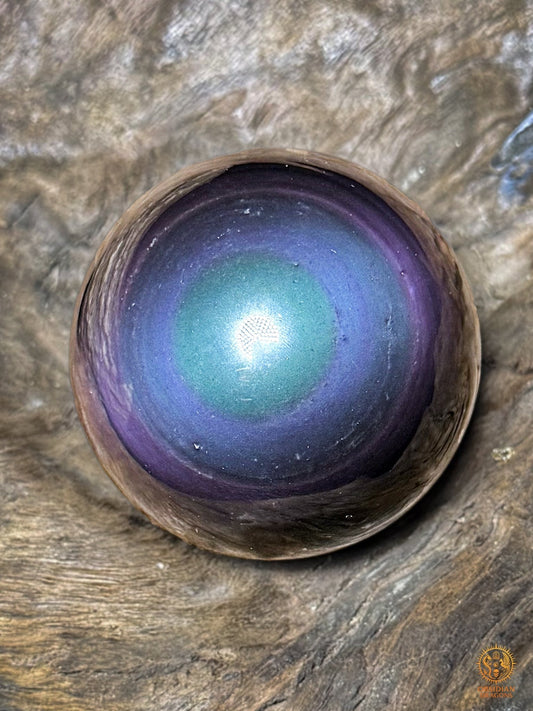

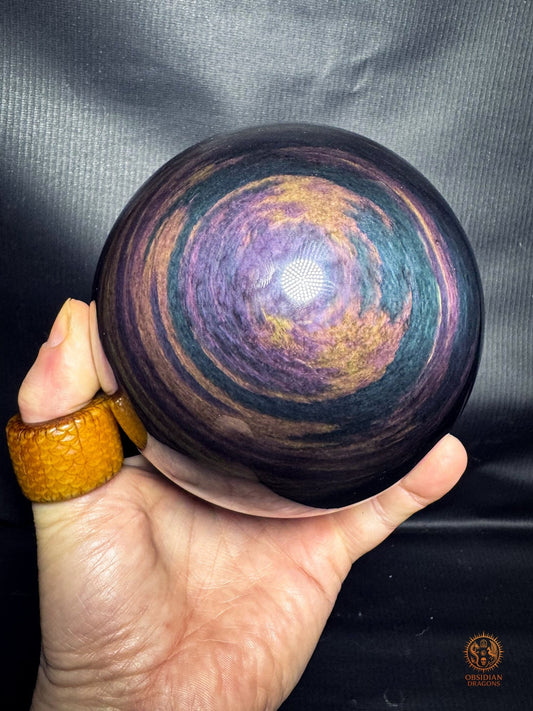

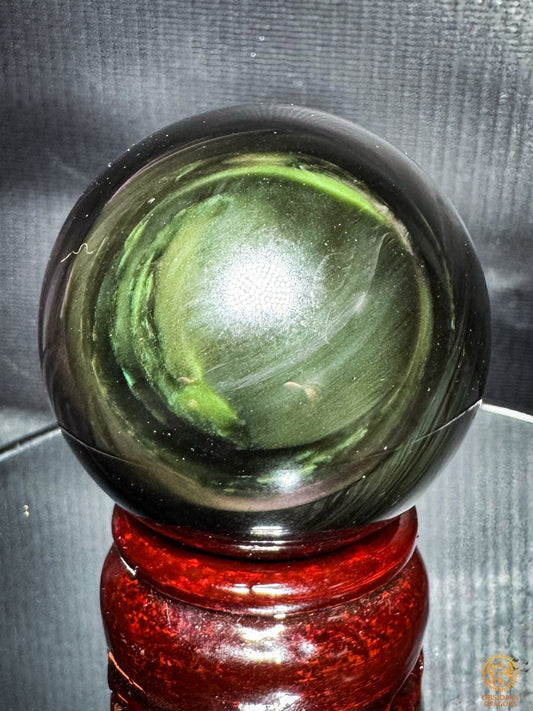

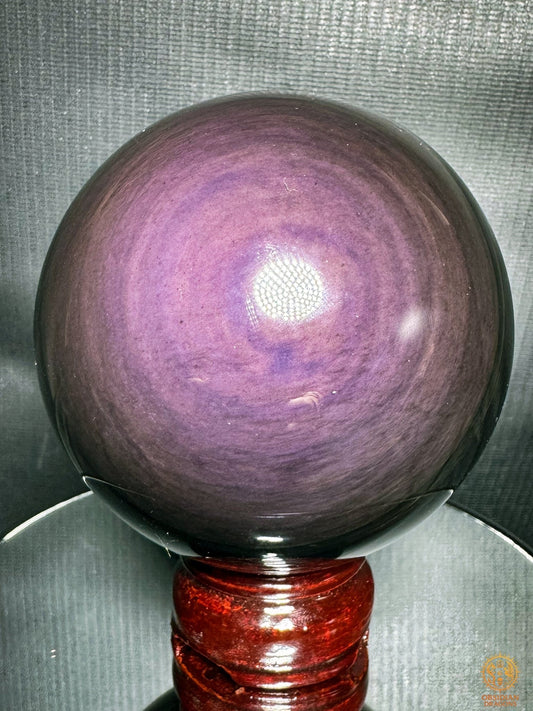

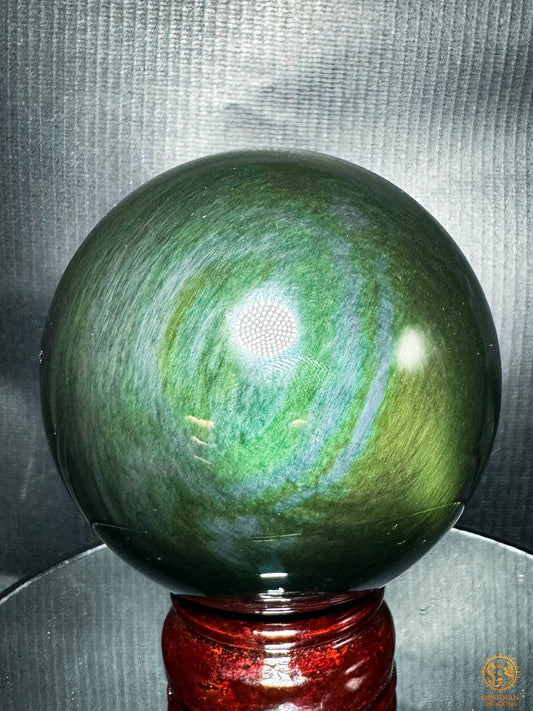

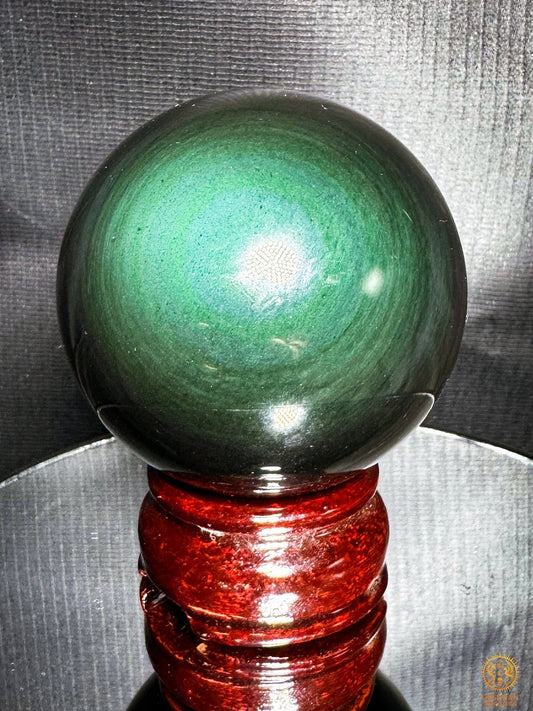

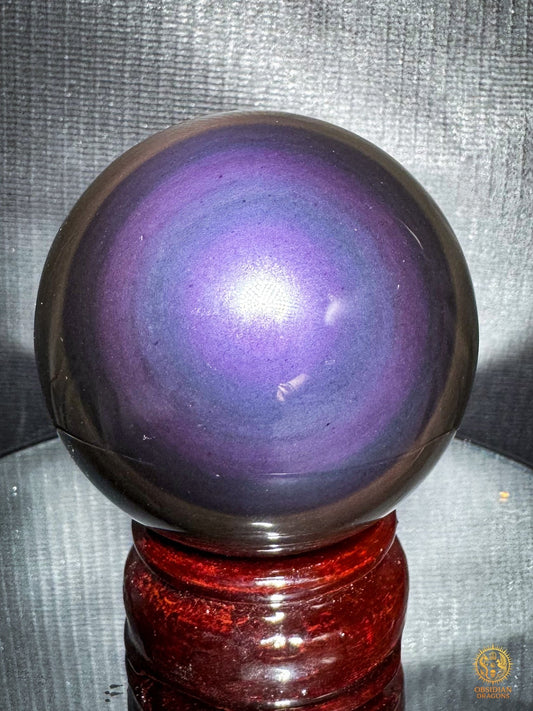

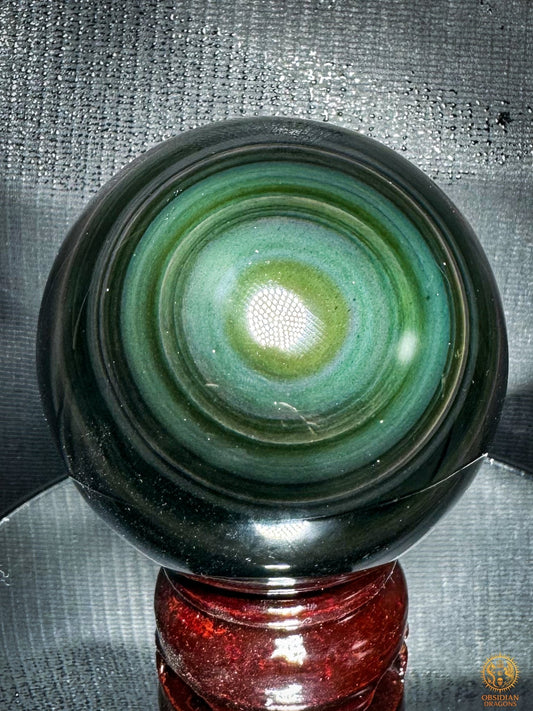

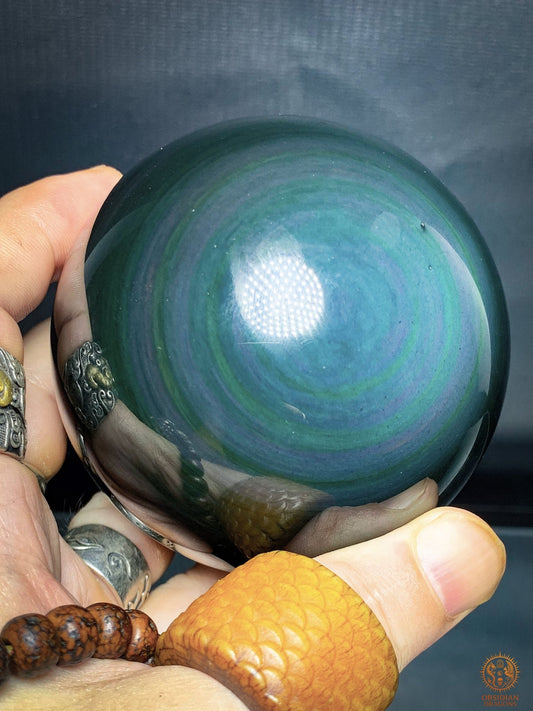

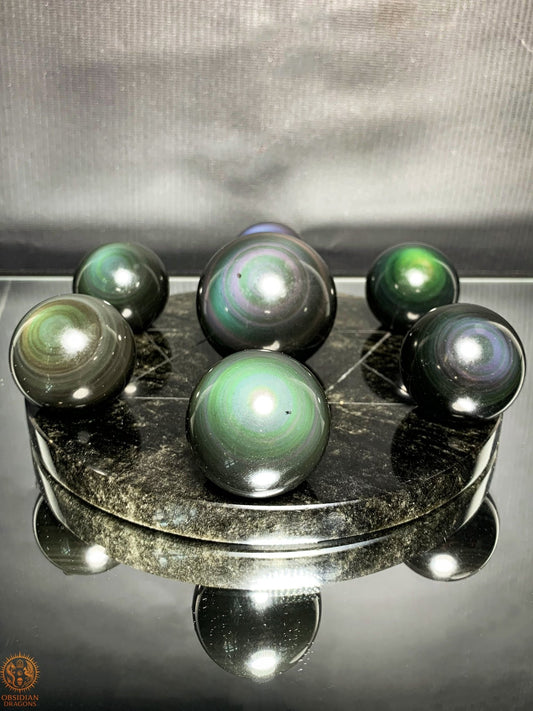

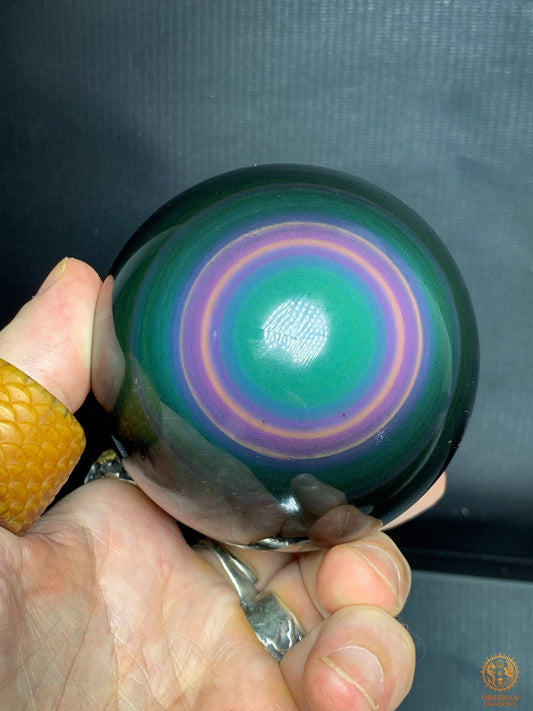

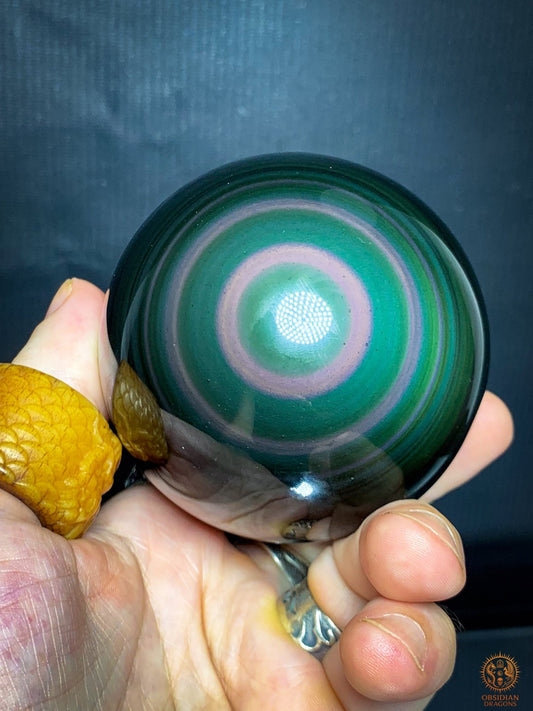

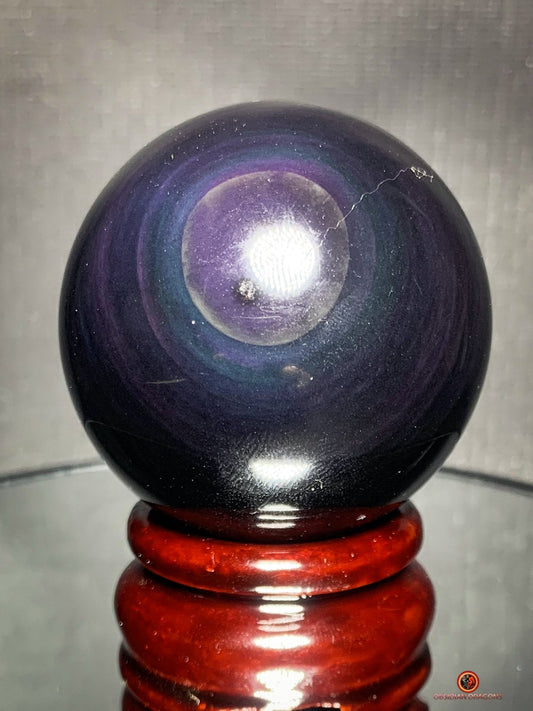

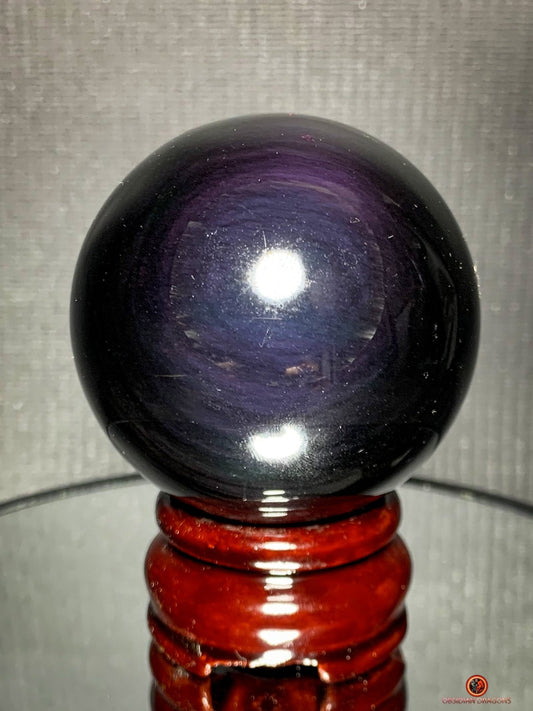

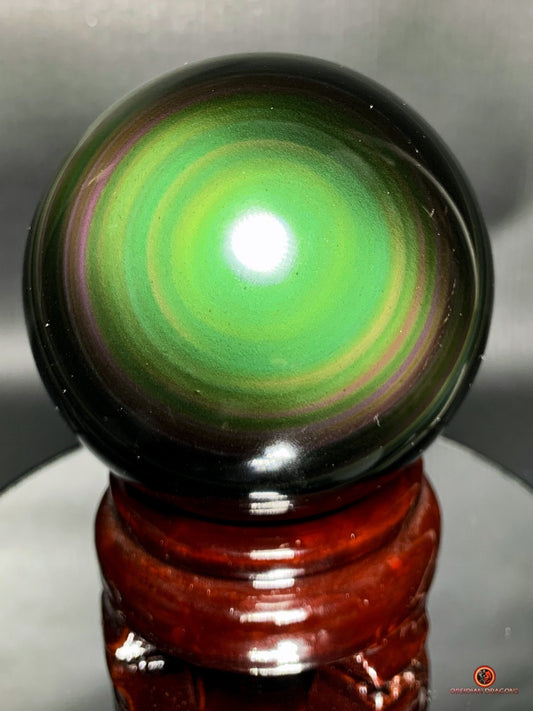

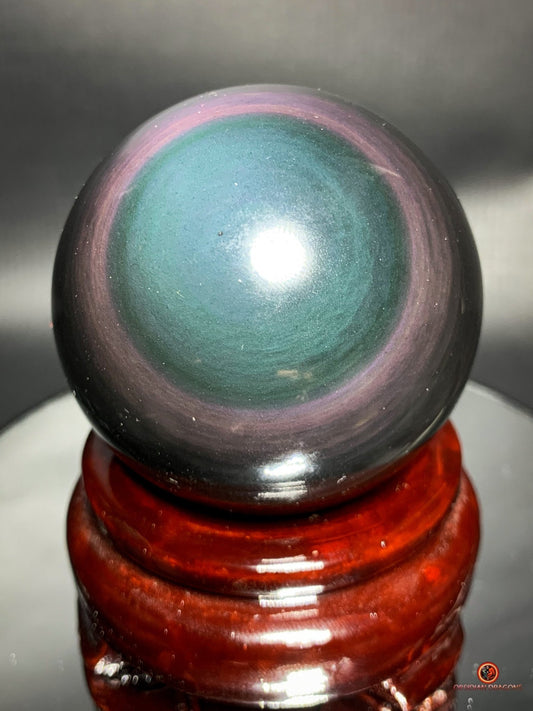
Collection: Natural Heavenly Eye obsidian spheres
Natural Celestial Eye Obsidian Spheres from Mexico: iridescent volcanic glass, protective stones, meditation, lithotherapy, and collector's items expertly appraised by a gemologist
Discover our collection of Celestial Eye obsidian spheres, unique pieces crafted from natural Mexican obsidian and chosen for the depth of their colors, the sharpness of their halos, and the quality of their polish. Under properly oriented light, their black surface reveals iridescent green, purple, blue, yellow, golden, or silver reflections. These shifting nuances give each sphere a unique identity impossible to replicate exactly.
As both a collectible mineral sphere, an object of contemplation, and a polished volcanic stone, each model is presented with its dimensions, weight, and specific photographs. The visible piece is therefore the one you choose. Small spheres easy to integrate into a personal space, large-diameter specimens, or imposing obsidian spheres weighing several kilograms: the collection allows you to freely compare the colors, the regularity of the concentric rings, and the presence of each stone.
Jeremy Guelle, founder of Obsidian Dragons and a gemologist graduated from the National Gemology Institute of Paris, selects these obsidians for their nature, optical interest, and overall quality. This gemological expertise supports a simple approach: to present each natural Celestial Eye obsidian sphere with precision, without concealing the variations and peculiarities that make a unique piece valuable.

🌋 What is Celestial Eye Obsidian?
Obsidian is a natural volcanic glass. It forms when the crystallization of silica-rich magma is severely limited during its solidification. The atoms then do not have the time or necessary conditions to form a complete crystalline organization: the material retains an amorphous structure and a glassy appearance. This origin explains its luster, conchoidal fracture, and the particular visual depth of black obsidian.
The term Celestial Eye obsidian commercially refers to an iridescent obsidian whose colors can appear in the form of bands, halos, or successive rings. It is also compared to rainbow obsidian due to its multicolored reflections. These do not correspond to artificial coloring or paint applied to the surface: in a properly identified natural stone, they result from optical phenomena produced by very fine structures and oriented inclusions within the volcanic glass.
The intensity of the reflections varies depending on the viewing angle, light orientation, and lapidary work. An obsidian that appears almost black under diffuse lighting can suddenly reveal a green, purple, or golden halo when turned towards a directional light source. The spherical shape is particularly interesting because its curvature allows for a gradual exploration of the material's different orientations.
👉 To learn more about its formation, gemological properties, main deposits, and common imitations,
consult our article dedicated to 📎 obsidian, its history, uses, and counterfeits.
🌈 Iridescent reflections and unique rings for each sphere
The beauty of a Celestial Eye obsidian sphere lies in the balance between the depth of the black, the sharpness of the iridescence, the arrangement of the bands, and how the reflections interact around the volume. Some pieces feature a very defined central eye. Others reveal multiple concentric halos, chevrons, colored layers, or more diffuse transitions.
Green and purple reflections are particularly sought after for their contrast with the dark mass of the stone. Blue nuances may appear more discreetly, while yellow, copper, golden, or silver tones produce a warmer light. A multicolored obsidian sphere can combine several of these nuances, but no universal hierarchy determines the most beautiful piece. The regularity of the rings will appeal to some collectors; others will prefer an asymmetrical, more expressive, almost pictorial composition.
Photographing an iridescent obsidian requires controlled lighting. The images of our products aim to show the colors actually present, but their intensity may vary in your environment. A punctual and slightly off-center light will generally highlight the halos better than uniform lighting. By slowly rotating the Celestial Eye obsidian ball on its base, you may discover details that are not revealed from any other angle.
🇲🇽 Natural obsidian originating from Mexico
Mexico has a long and deep relationship with obsidian. This material was used there to make tools, blades, prestige objects, ornaments, and various ritual pieces. Its ability to produce extremely fine edges gave it considerable practical value, while its dark, reflective luster also nourished a rich symbolic language.
The obsidian spheres from Mexico assembled by Obsidian Dragons belong to this mineral history, while being contemporary creations intended for collection, decoration, or contemplation. Their exact origin should be assessed based on the information provided for each piece. When the provenance from a particular deposit is documented, it is specified on the corresponding sheet; a Mexican origin should not be automatically equated with Sierra de las Navajas, as the country has several volcanic areas and obsidian sources.
Each sphere is cut and then polished to expose the most interesting orientations of the material. This process transforms a volume of natural volcanic glass into a continuous surface, capable of successively revealing its internal bands. Small irregularities, variations in hue, or natural inclusions are not necessarily defects. On the contrary, they can document the formation of the stone and distinguish a natural piece from a perfectly uniform industrial object.
🔭 Gemological selection and search for authenticity
Recognizing a genuine Celestial Eye obsidian is not simply about observing a color in a photograph. Manufactured glass can imitate the brilliance of certain stones and take on particularly attractive hues. Gemological identification relies on a set of observations: appearance of inclusions, behavior under different lighting, structure, density, and overall coherence of the material.
The intervention of a gemologist makes a real difference here. Jeremy Guelle examines the nature of each piece and looks for clues that might reveal an imitation or treatment. When a sphere is advertised as natural and untreated, this description corresponds to the examination performed and the available information. Expertise allows us to distinguish obsidian, a natural volcanic glass, from numerous artificial glass productions.
An authentic obsidian sphere must also be described with concrete data. The diameter allows for an assessment of its actual volume, the weight indicates its presence, and the contractual photographs show the piece from several orientations. For the most significant specimens, a video can complement the images and make the movement of reflections more perceptible.
This transparency is essential for purchasing a Celestial Eye obsidian sphere remotely. It allows you to choose a stone for what it truly is, rather than for an accumulation of qualifiers such as "rare," "premium," or "exceptional."
💎 How to choose a Celestial Eye obsidian sphere?
👁️ Observe the halo structure
Start by looking at the arrangement of colors. A well-defined central eye creates a strong and immediately legible composition. Multiple concentric rings create more depth, while irregular bands offer a wilder appearance. However, the quality of an obsidian sphere is not limited to the number of circles: the intensity of the reflections, their continuity, and their balance around the volume are just as important.
🎨 Choose the colors that attract you
An obsidian sphere with green and purple reflections will produce a different atmosphere than a piece dominated by yellow, copper, or silver. Photographs allow you to compare these nuances, but it is useful to remember that they will change with the light in your room. Therefore, choose the general composition as much as the most spectacular color shown in an image.
📏 Compare diameter and weight
A small obsidian sphere of 50 or 60 mm can easily be placed on a desk, in a display cabinet, or near a meditation space. A sphere of 70 to 90 mm already has a significant presence and generally allows for a broader reading of the reflections. A large Celestial Eye obsidian sphere of 10, 12, or 13 cm becomes a true mineral sculpture; its weight and the stability of its support must then be taken into account.
The dimensions displayed on each product sheet are more reliable than photographs alone for appreciating the scale. Also, check the weight before selecting a base or shelf. A 1 kg or 2 kg obsidian sphere requires a stable support, a flat surface, and careful handling.
✨ Examine the polish and surface condition
A consistent polish enhances the readability of the iridescence and the continuity of the reflections. However, natural obsidian may retain a small cavity, a surfacing inclusion, or a discreet irregularity. These peculiarities should be visible or indicated in the product description. They do not all have the same importance and can perfectly integrate into the character of a mineralogical specimen.
🤲 Choose according to the intended use
For a mineralogical collection, prioritize optical singularity, documented origin, and polish quality. For a decorative object, consider its harmony with the light and volumes of the room. For contemplation or meditation, choose a sphere whose colors and presence naturally invite you to slow down your gaze. It is not necessary to seek the largest or most expensive: the relationship to a stone remains deeply personal.
🌀 Huichol Cloak Obsidian Spheres
The collection also includes several Huichol Cloak obsidian spheres, a commercial name used for certain Mexican obsidians with particularly developed iridescent patterns. These large pieces can exhibit colored layers, concentric movements, and remarkable contrasts that make them highly sought after as collector's items.
The commercial name "Manto Huichol" is sometimes linked, in the mineral trade, to the colorful patterns of Wixárika art and the visions associated with hikuri, or peyote. The ritual connection between the Wixárika people and this sacred plant is historically documented, but the exact origin of this name applied to obsidian remains difficult to establish from a scientific reference source. It should therefore be understood as a commercial and symbolic explanation rather than a certain mineralogical etymology.
A large Huichol Cloak sphere can exceed ten centimeters in diameter and weigh several kilograms. It is particularly aimed at enthusiasts of iridescent volcanic glass, collectors of Mexican minerals, and individuals seeking an imposing centerpiece. Its value depends on its dimensions, but also on the expression of its colors, the quality of the polish, and the visual rarity of the pattern.
🧘 Meditation, contemplation, and symbolic uses
The spherical shape has no visible beginning or end. It naturally evokes totality, cyclical movement, and balance. Associated with the deep black of obsidian and its changing halos, it becomes a particularly powerful support for contemplation on an aesthetic level.
A meditation obsidian sphere can be placed in front of you as a point of focus. Simply observe its surface, follow a reflection, or let your gaze slowly wander over its rings. This practice imposes no particular belief: it can simply help to create a moment of calm and concentration.
In contemporary lithotherapy, Celestial Eye obsidian is frequently presented as a stone of protection, grounding, and introspection. It is sometimes associated with the root chakra, lucidity, work on buried emotions, and awareness of certain personal patterns. These correspondences belong to spiritual traditions and symbolic interpretations; they do not constitute medical properties and do not replace any diagnosis, treatment, or professional support.
For some people, an energetic protection sphere thus becomes a material reminder of the intention they wish to cultivate. For others, it remains above all a natural work born from a volcanic phenomenon. These two perspectives can coexist, provided that the observable characteristics of the stone are clearly distinguished from the meanings that each person chooses to attribute to it.
🏛️ A mineral sphere for decoration and collection
A Celestial Eye obsidian ball can occupy a central place in a cabinet of curiosities, a library, an office, or a space dedicated to minerals. Its black color easily blends with wood, metal, stone, and dark atmospheres. Under warm light, its golden or coppery reflections gain depth; more neutral lighting often allows for better distinction of green, blue, and purple nuances.
To highlight the piece, place it on a base suitable for its diameter and weight. Avoid unstable edges: a sphere can easily roll, and obsidian, although sufficiently resistant for decorative use, remains susceptible to impacts. A fall can cause a chip or a very sharp break.
Directional light placed slightly above or to the side will better reveal the iridescence than diffuse overhead lighting. Then slowly turn the sphere on its support until you find the orientation where the eye, halos, or bands become most legible. This simple staging is often enough to transform an apparently black obsidian into a true multicolored volcanic landscape.
🧼 Care of a polished obsidian sphere
Clean your sphere with a soft, dry or very slightly damp cloth. If necessary, use lukewarm water and a neutral soap, then immediately dry the surface to avoid streaks. Abrasive products, household polishing powders, solvents, and thermal shocks are not recommended.
Handle large spheres with two hands and over a protected surface. To move a heavy piece, grasp the sphere itself rather than its base. Regularly check the stability of the support, especially on furniture exposed to vibrations or accessible to children and animals.
The purification or recharging of obsidian belongs to individual spiritual practices and is not necessary for its material preservation. If you choose to accompany your stone with meditation, an intention, or a personal ritual, nevertheless avoid methods that could damage it, such as exposure to strong heat, risky burial, or contact with abrasive substances.
💶 What is the price of a Celestial Eye obsidian sphere?
The price of a Celestial Eye obsidian sphere primarily depends on its diameter and weight, but these two criteria are not sufficient. The presence of well-defined rings, the intensity of the reflections, the diversity of colors, the successful orientation of the cut, the quality of the polish, and the overall condition also influence its value. Therefore, two spheres of similar dimensions can have different prices.
Smaller models offer an accessible way to discover iridescent obsidian. Collector-quality spheres, large obsidian balls, and some Manto Huichol specimens require more material and more extensive cutting work. Their price also reflects their uniqueness: a piece with particularly expressive halos cannot be identically reproduced.
Each product sheet indicates the price of the currently available obsidian sphere as well as its actual characteristics. When a piece is unique, its acquisition leads to its definitive removal from the collection.
⭐ Why choose Obsidian Dragons?
Choosing an obsidian sphere from Obsidian Dragons means gaining access to a selection built around knowledge of the material. The gemologist's eye does not replace the emotion felt in front of a stone; it provides a framework, observations, and a demand for transparency.
Each piece is individually examined. Its diameter, weight, dominant colors, and particularities are taken into account to offer a description as faithful as possible. The photographs highlight the sphere actually offered and allow specimens to be compared without reducing the collection to generic images.
This approach is aimed at people who want to buy a Celestial Eye obsidian sphere for its natural beauty, collectors looking for a particular Mexican obsidian, and meditation enthusiasts sensitive to its symbolism. It combines gemological expertise, aesthetic selection, and respect for the uniqueness of each piece.
❓ Frequently asked questions about Celestial Eye obsidian spheres
How to recognize a real Celestial Eye obsidian?
A photograph or a color is not always enough. Serious identification examines the consistency of reflections, inclusions, structure, density, and optical behavior of the material. Some artificial glass imitations can be convincing. A gemologist's examination and a transparent description are therefore more relevant guarantees than a simple trade name.
What is the difference between Celestial Eye obsidian and rainbow obsidian?
In French-speaking trade, the two appellations often overlap. "Rainbow" emphasizes the diversity of iridescence, while "Celestial Eye" refers more specifically to their arrangement in halos or rings resembling an eye. These names describe an appearance; they do not correspond to two officially distinct mineral species.
What is the difference between Celestial Eye obsidian and Manto Huichol?
Both are natural obsidians that can exhibit iridescent effects. Manto Huichol is a more specific trade name, used for certain Mexican stones with sought-after patterns and colors. The exact denomination, the announced origin, and the appearance of each piece must be examined individually.
What size sphere should I choose?
A 50 to 60 mm sphere is suitable for a small space or a first acquisition. Between 70 and 90 mm, the stone gains presence and allows more room for the development of patterns. Beyond 10 cm, it becomes a major decorative or mineralogical piece requiring robust support. The best choice depends on the available space, acceptable weight, and desired visual expression.
How to make the obsidian reflections appear?
Use a directional lamp and observe the sphere from a slightly different angle than the light source. Slowly rotate the stone. Reflections are related to the internal orientation of the material: they can be spectacular in one position and almost invisible a few degrees further.
Where to place an obsidian sphere?
It can be installed in a display cabinet, an office, a library, a meditation space, or a mineral cabinet. Choose a stable surface, a suitable base, and a location where lateral light allows its colors to be appreciated. Avoid ledges, passageways, and fragile supports.
Does Celestial Eye obsidian have protective virtues?
Lithotherapy and various esoteric currents traditionally associate it with protection, grounding, and introspection. These virtues are spiritual interpretations and are not scientifically established as therapeutic effects. However, the stone can have significant personal, aesthetic, or symbolic value for its owner.
Where to buy a natural Celestial Eye obsidian sphere?
Prefer a shop capable of showing the exact piece, specifying its diameter, weight, and announced origin, and explaining the method used to verify the material. Obsidian Dragons offers Celestial Eye obsidian spheres for sale as individually identified pieces selected by a certified gemologist.
🔥 Discover your Celestial Eye obsidian sphere
Each sphere is the meeting point between a volcanic phenomenon, cutting work, and an eye. Some immediately attract with a perfectly drawn concentric eye; others require turning and long observation before revealing their colors. A small piece can contain a reflection of astonishing precision, while a large obsidian sphere transforms the material into a mineral landscape.
Explore the photographs, compare diameters, weights, and iridescence, then choose the sphere whose presence truly matches your search. To discover the same material in other forms, also browse our collection of Celestial Eye, golden and silver obsidian in tumbled stones, hearts, and free forms.
Whether it is intended for a mineralogical collection, decoration, contemplation, or personal meditative practice, your Mexican Celestial Eye obsidian sphere will remain, above all, a unique natural piece, chosen for the intensity of its reflections and the silent strength of its volcanic material.